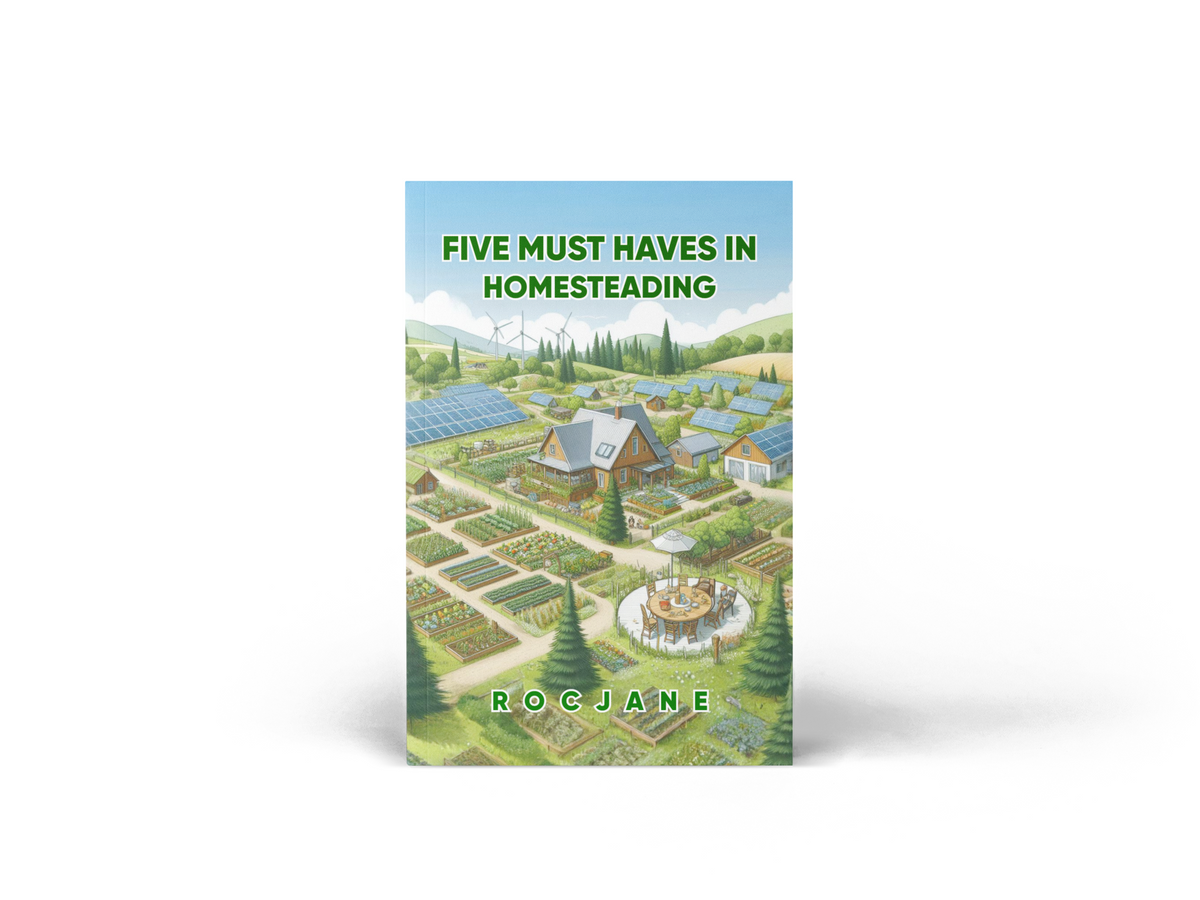

Five Must Haves in Homesteading Ebook
Five Must Haves in Homesteading Ebook
Couldn't load pickup availability
Homesteading is not defined by owning hundreds of acres, living completely off-grid, or mastering every traditional skill at once. It begins with thoughtful planning, practical knowledge, and systems that support your household over time.
Five Must Haves in Homesteading introduces five essential foundations for developing a more self-reliant lifestyle: shelter, food, water, energy, and community.
Whether you are preparing for rural living, developing a small suburban homestead, or simply becoming less dependent on outside systems, this beginner-friendly guide can help you identify priorities before investing your time, money, and labor.
Readers will explore how secure shelter protects people, animals, tools, and supplies; how food production can begin at an achievable scale; and why reliable access to safe water requires careful planning. The book also introduces renewable and backup-energy considerations while emphasizing the importance of neighbors, local knowledge, and dependable support networks.
Self-sufficiency does not mean doing everything alone. A resilient homestead combines useful skills, realistic systems, ongoing learning, and strong relationships.
THE FIVE HOMESTEADING MUST-HAVES
1. SECURE AND PRACTICAL SHELTER
Consider housing, storage, weather protection, ventilation, sanitation, maintenance, tools, livestock needs, and the demands of the local climate.
2. A REALISTIC FOOD-PRODUCTION PLAN
Begin with manageable gardens, appropriate crops, soil improvement, seasonal planning, food storage, and livestock only when your space, time, budget, and experience allow.
3. RELIABLE AND SAFE WATER
Evaluate drinking water, irrigation, storage, conservation, testing, filtration, emergency reserves, and the regulations governing wells, rainwater collection, and wastewater.
4. DEPENDABLE ENERGY
Explore grid-connected, renewable, and backup options while considering household needs, climate, costs, maintenance, fuel storage, and professional installation.
5. COMMUNITY AND PRACTICAL SUPPORT
Build relationships with neighbors, farmers, tradespeople, emergency services, local suppliers, experienced homesteaders, and others who can exchange knowledge, skills, and assistance.
INSIDE, READERS WILL DISCOVER
• How to define a realistic vision for a homestead
• Questions to consider before choosing land or beginning major projects
• Shelter, storage, sanitation, and weather-preparation priorities
• Beginner-friendly approaches to gardening and food production
• Soil, climate, growing-season, and crop-selection considerations
• An introduction to food preservation and household reserves
• Water-source, storage, conservation, and testing considerations
• Basic renewable-energy and backup-power planning
• Why zoning, permits, water rights, and building codes matter
• Ways to match projects to available time, money, space, and ability
• The importance of emergency planning and system redundancy
• How community relationships strengthen independence and resilience
• Why gradual progress is often more sustainable than attempting everything at once
Five Must Haves in Homesteading provides a practical starting point for readers who want to create a more intentional, resourceful, and sustainable way of life.
Start with the essentials. Build one dependable system at a time. Let your homestead grow with your knowledge and experience.
PRACTICAL INFORMATION DISCLAIMER
This book provides general educational information and is not a substitute for professional agricultural, architectural, engineering, electrical, plumbing, environmental, medical, veterinary, financial, or legal advice.
Zoning rules, building codes, permits, water rights, rainwater-collection laws, sanitation requirements, food-safety regulations, livestock ordinances, fire restrictions, and energy standards vary by location. Readers should consult qualified professionals and appropriate local authorities before purchasing property, constructing buildings, altering utilities, installing energy systems, establishing water or waste systems, preserving food, or keeping livestock.
EBOOK PRODUCT DETAILS
- Format: eBook
- Genre: Homesteading, Sustainable Living, Self-Sufficiency, Preparedness, and Home and Garden
- Themes: Shelter, food production, gardening, water security, renewable energy, off-grid planning, community, resilience, practical skills, preparedness, and sustainable living
- Audience: Beginning homesteaders, gardeners, rural-living enthusiasts, homeowners, renters, families, preparedness-minded readers, and adults interested in greater household self-reliance
- Author: RocJane